Morocco travel tips: 30 things to know before you go
Essential Morocco travel tips for first-time visitors: money, tipping, haggling, SIM cards, transport, riads, etiquette, photos, Ramadan and more.
A little preparation turns Morocco from overwhelming to wonderful. These are the practical tips our drivers and guides share with every traveller they meet at arrivals.
Money
- The currency is the Moroccan dirham (MAD). It is a closed currency: get it on arrival from ATMs or exchange offices.
- ATMs are easy to find in cities; carry cash for souks, taxis, tips and small restaurants.
- Cards are accepted in most hotels and many restaurants, rarely in the souks.
- Keep small notes and coins: change is often short.
Tipping
- Restaurants: around 10% is appreciated.
- Porters and riad staff: a few dirhams per bag or service.
- Guides and drivers: tipping is customary at the end of a tour; give what reflects your experience.
- Hammam attendants and camel guides also appreciate a tip.
Haggling
- Haggling is normal in the souks, not in supermarkets or fixed-price shops.
- Decide what the item is worth to you before asking the price.
- Stay friendly and patient; it is a conversation, not a fight.
- Walking away politely is part of the game.
Getting around
- Trains connect Marrakech, Casablanca, Rabat, Fes and Tangier; the Al Boraq high-speed line links Casablanca and Tangier.
- Buses (CTM, Supratours) reach most towns.
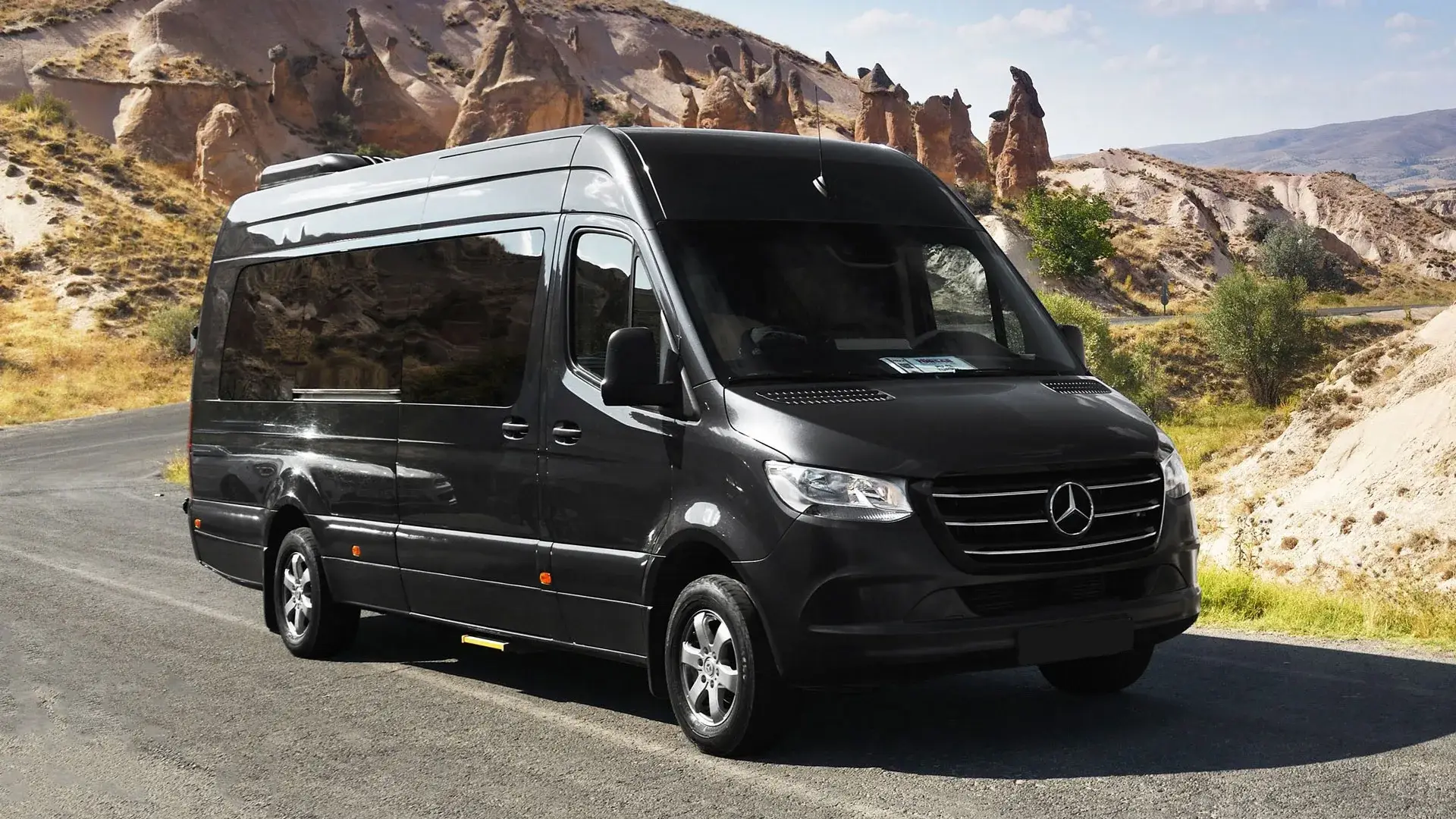
- The Sahara, the Atlas and small villages are far easier with a private driver.
- Petit taxis work inside cities; ask for the meter or agree the price.
Connectivity
- Buy a local SIM (Maroc Telecom, Orange, inwi) at the airport with your passport; data is cheap.
- Download offline maps: medina lanes confuse GPS.
- Wi-Fi is common in riads and hotels.
Etiquette and culture
- Greet with "Salam alaikum"; "shukran" means thank you.
- Ask before photographing people.
- Non-Muslims cannot enter most mosques, except the Hassan II Mosque in Casablanca.
- Public displays of affection are best kept discreet.
- Friday is the main prayer day; some shops close at midday.
Riads
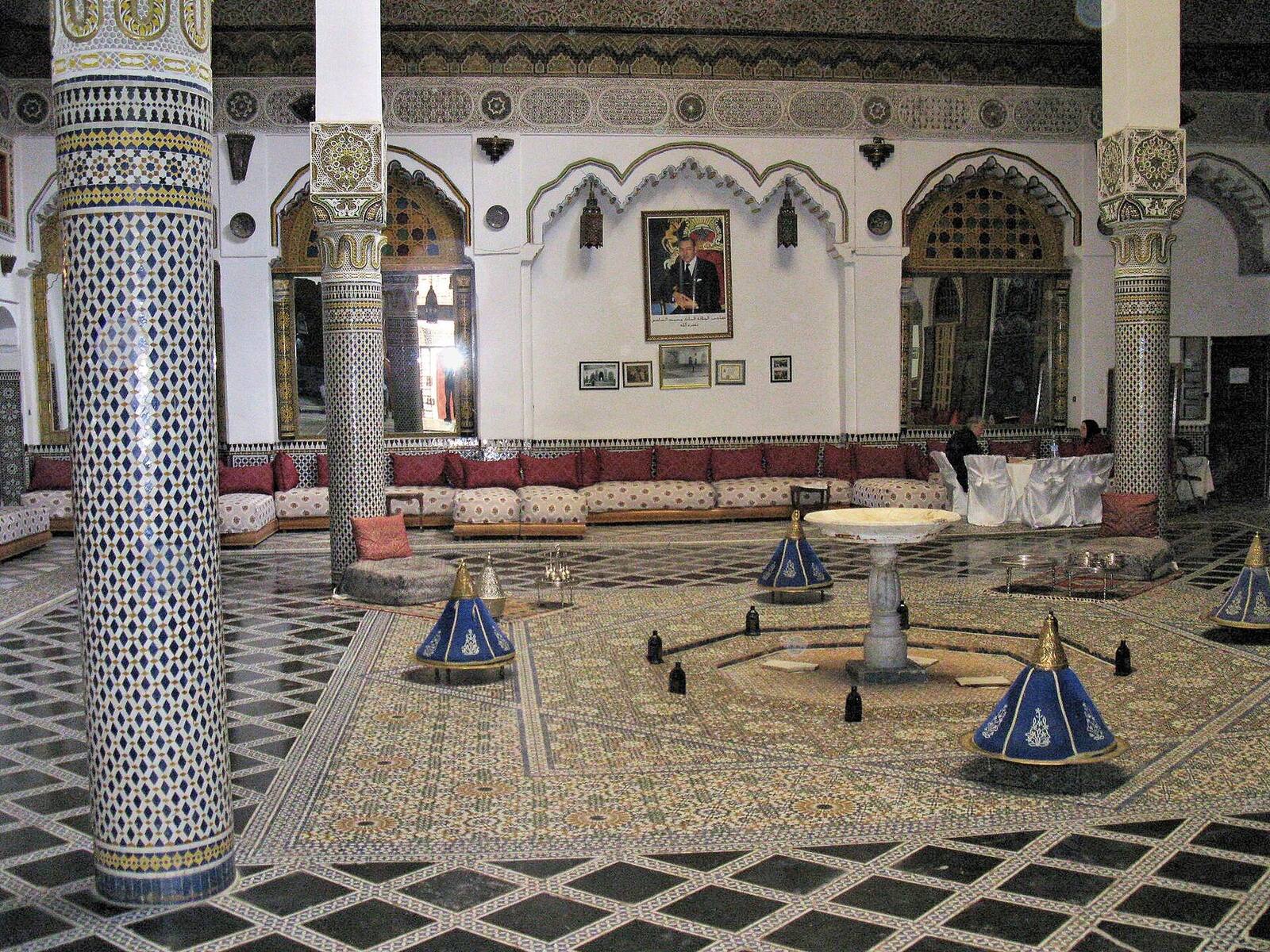
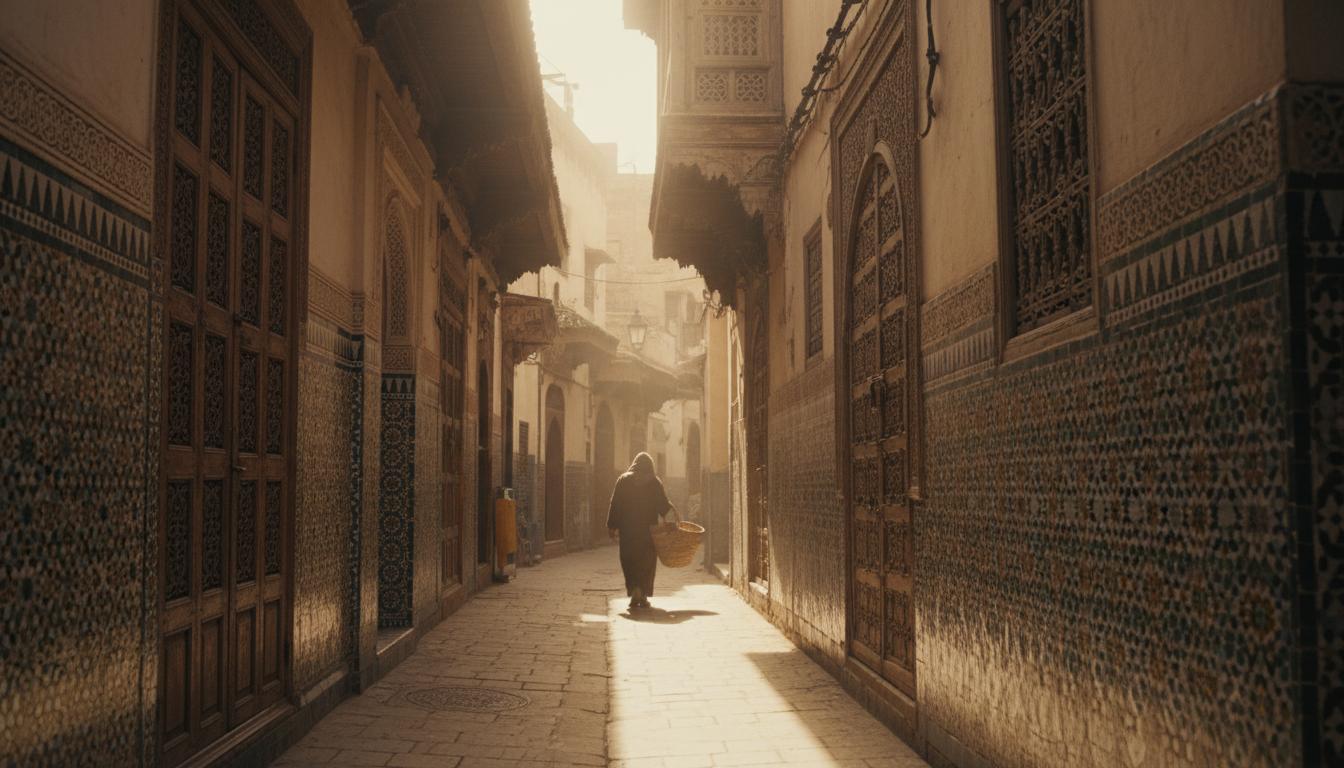
A riad is a traditional house built around an inner courtyard, now often a guesthouse. They are calm and full of character, but usually reached on foot through the medina, so arrange for someone to meet you on arrival.
Language
Arabic (Darija) and Amazigh (Berber) are the local languages; French is widely spoken, and English is common in tourism. A few words of French or Darija go a long way.
Getting around on your first trip
Trains are comfortable between the big cities (Marrakech, Casablanca, Rabat, Fes, Tangier) and the Al Boraq high-speed line links Tangier to Casablanca in about 2 hours. Buses (CTM, Supratours) reach most towns. For the Atlas, the desert, the coast and anywhere off the main lines, a private driver is the simplest option.
The single best tip for a first trip is to have your arrival organised: a driver waiting at arrivals with your name, who takes you to your riad door. It removes the stress of taxis, haggling and finding your way through a medina on your first night.
Related private tours
Frequently asked questions
Do I need a visa for Morocco?
Citizens of many countries, including the EU, UK, USA, Canada and Australia, can usually enter visa-free for up to 90 days. Rules change, so always check the official requirements for your nationality before travelling.
Can I use euros or dollars in Morocco?
Some hotels and tour operators accept them, but day-to-day you need dirhams. Exchange or withdraw on arrival.
Is English spoken in Morocco?
In tourist areas, hotels and with guides, yes. French and Arabic are more common elsewhere.
Photo credits
- Palais mnebhi IMG 2609: Robert Prazeres, CC BY-SA 4.0, Wikimedia Commons