20 Moroccan dishes you must try
A food lover's guide to Morocco: tagine, couscous, pastilla, tanjia, harira, mechoui, msemen, mint tea and more, with where to find them and food etiquette.
Moroccan cuisine is one of the great cuisines of the world: slow-cooked, fragrant with cumin, saffron and preserved lemon, and always generous. Here are the dishes worth seeking out, from street stalls to family kitchens.
The classics
- Tagine: stew slow-cooked in its conical clay pot. Try chicken with preserved lemon and olives, or beef with prunes and almonds.
- Couscous: traditionally eaten on Fridays, with seven vegetables or caramelised onions and raisins (tfaya).
- Pastilla: flaky pastry filled with pigeon or chicken, almonds and cinnamon, dusted with sugar; also a seafood version.
- Tanjia: Marrakech's bachelor dish, beef cooked for hours in an urn buried in the embers of a hammam furnace.
- Mechoui: whole roasted lamb, tender enough to pull apart by hand.
- Rfissa: shredded msemen with chicken, lentils and fenugreek, a family celebration dish.
Soups and starters
- Harira: tomato, lentil and chickpea soup, the dish that breaks the fast during Ramadan.
- Bissara: thick fava bean soup with olive oil and cumin.
- Zaalouk: smoky aubergine and tomato salad.
- Taktouka: roasted pepper and tomato salad.
Street food
- Msemen and baghrir: square flaky pancakes and "thousand-hole" pancakes, perfect with honey and butter.
- Grilled sardines in Essaouira's port.
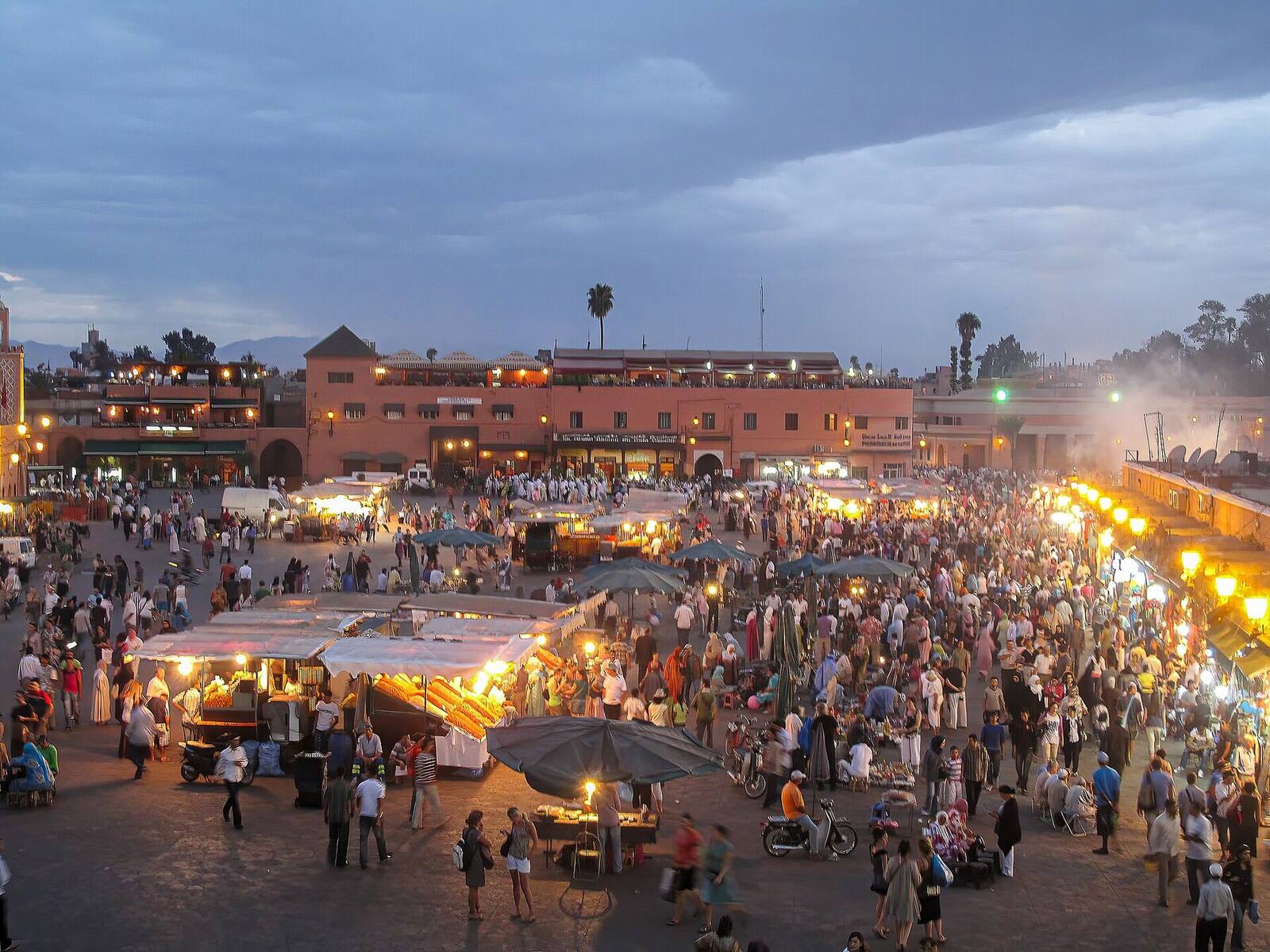
- Snail soup on Jemaa el-Fnaa, for the curious.
- Sfenj: Moroccan doughnuts.
- Kefta: spiced minced meat skewers or tagine with eggs.
Sweets and drinks
- Mint tea, poured from high: the symbol of hospitality.
- Cornes de gazelle and chebakia pastries.
- Amlou: argan oil, almonds and honey spread from the Souss region.
- Fresh orange juice from the stalls of Jemaa el-Fnaa.
- Avocado smoothies (jus d'avocat), surprisingly delicious.
Food etiquette
- Eat with your right hand when sharing from a common dish.
- Bread is sacred: never throw it away.
- Refusing tea the first time can seem impolite; accept at least one glass.
- Alcohol is available in licensed restaurants and hotels, not everywhere.
The best way to discover it
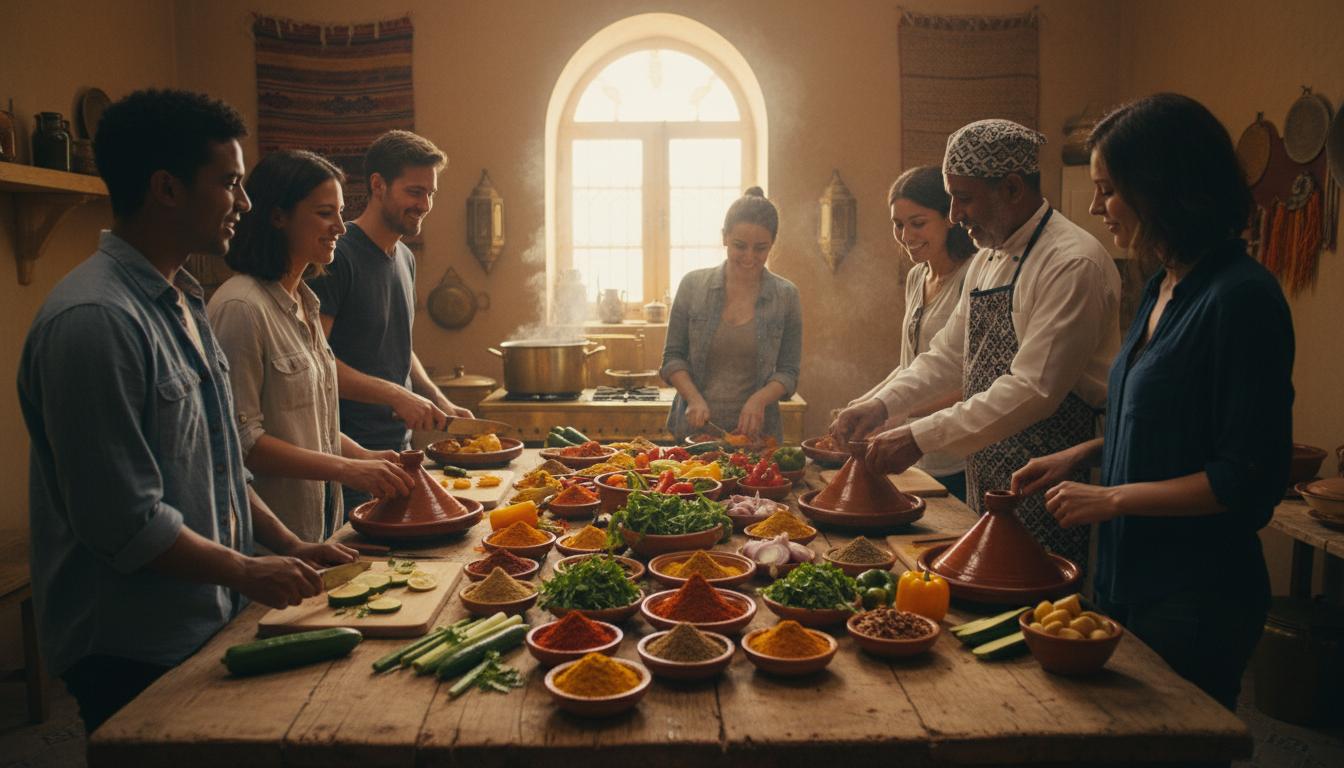
A cooking class in Marrakech, starting with a market visit and ending at the table, is one of the most loved experiences in Morocco. A dinner with a Berber family in the Atlas is another.
Food on the road
Some of the best food in Morocco is found on the road: grilled lamb in the butchers' villages on the Tichka, fresh msemen at roadside cafés, tagines cooked in clay ovens in the Dades, dates in Erfoud and grilled sardines at the port of Essaouira. Your driver knows the honest places locals stop at.
Meals are never part of our service, which means you are free to eat where you like and pay local prices. Just tell your driver what you feel like, and he will stop at the right place.
Related private tours
Frequently asked questions
What is the national dish of Morocco?
Couscous is considered the national dish, with tagine a close second. Both are eaten all over the country.
Is Moroccan food spicy?
It is fragrant rather than hot. Spices like cumin, cinnamon, ginger and saffron are used generously, and harissa is served separately.
Is street food safe in Morocco?
Generally yes, when it is cooked fresh in front of you at busy stalls. Drink bottled water and start gently if your stomach is sensitive.
Photo credits
- 2026 (365 Challenge) - Day 187 - Jemaa el-fnaa square with evening market, Marrakech, Morocco 2010 - Flickr - ambabheg: Forbes Johnston from Winchester, UK, CC BY 4.0, Wikimedia Commons